What Does KARATE Mean?
By Mo-ichido England • Updated 2025
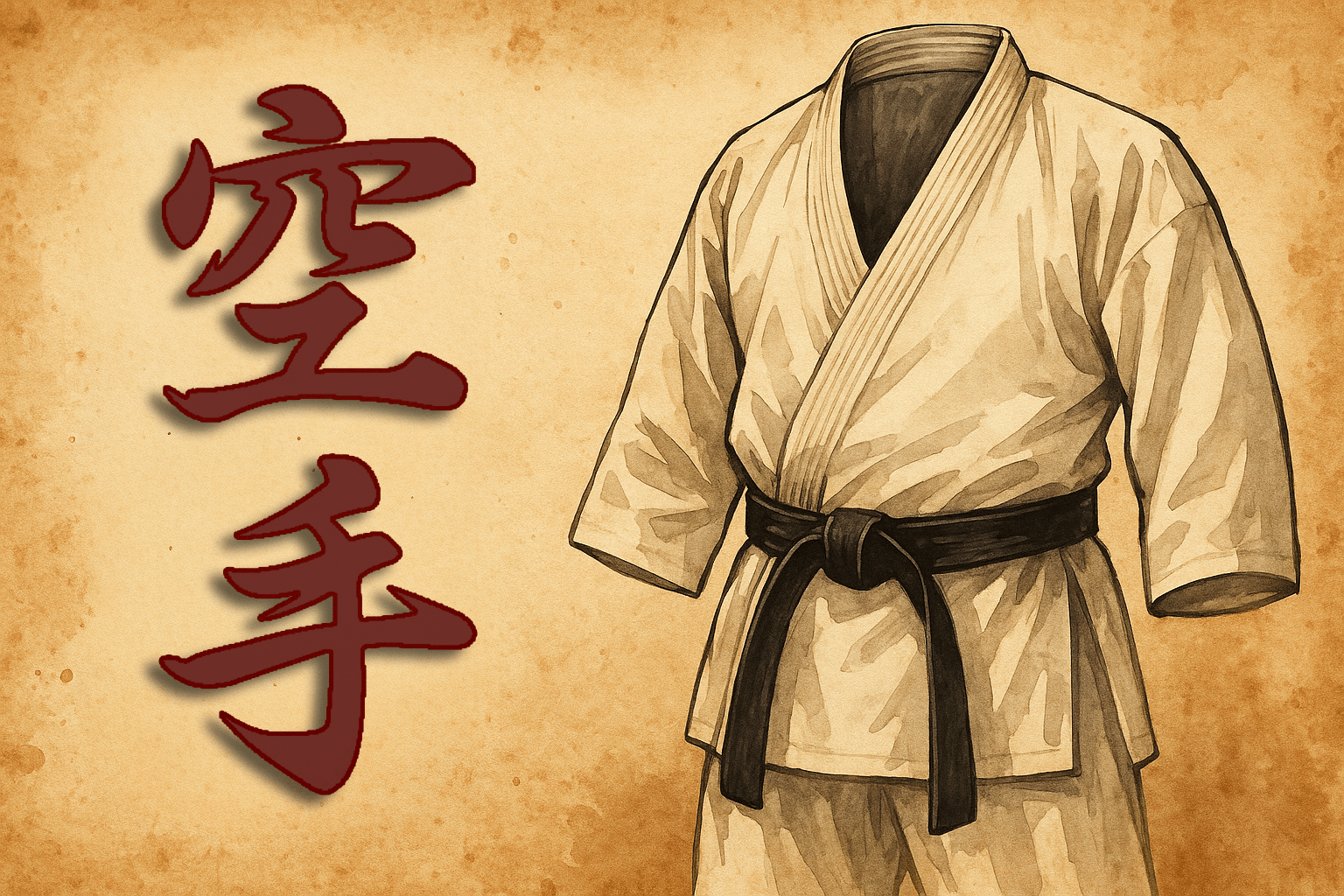
Many people know Karate as a powerful martial art, but fewer understand what the word itself truly means. The word Karate carries deep historical and cultural significance, reflecting its evolution from old Okinawan fighting traditions into the modern art we practise today.
The Original Meaning of Karate: “Chinese Hand”
Early Karate was heavily influenced by Chinese martial arts brought to Okinawa through trade and cultural exchange. Because of this, the original written form of “Karate” used the characters:
- 唐手 (Karate) – literally “Tang Hand” or “Chinese Hand”
These characters referenced the “Tang Dynasty” culture, a common Okinawan way of referring to China.
The Modern Meaning: “Empty Hand”
In the early 20th century, Okinawan masters wanted Karate to be accepted in mainland Japan. Gichin Funakoshi and others promoted a new way of writing the word:
- 空手 – “Empty Hand”
This new meaning reflected both:
- The art’s focus on unarmed self-defence
- A spiritual idea of “emptiness” rooted in Zen philosophy
With this change, Karate was no longer seen simply as a Chinese-influenced fighting system, but a uniquely Japanese martial art.
Why “Empty Hand” Matters
The idea of “empty hand” is at the heart of modern Shotokan Karate:
- No weapons are needed – the body is the tool
- Emphasis on discipline – controlling one’s emotions
- Focus on personal development
Karate today is not just about physical power, but about developing a strong body, clear mind and respectful attitude.
Ready to Learn More?
Visit our Blog for more articles on Shotokan history, culture and training.
Join Mo-ichido England